Greece Enters the MiCA Register with Its First Four Authorized Crypto Firms
Greece’s first four MiCA-registered crypto firms, including Piraeus Bank, join the ESMA register as HCMC denies claims about a Lagarde-Binance intervention.

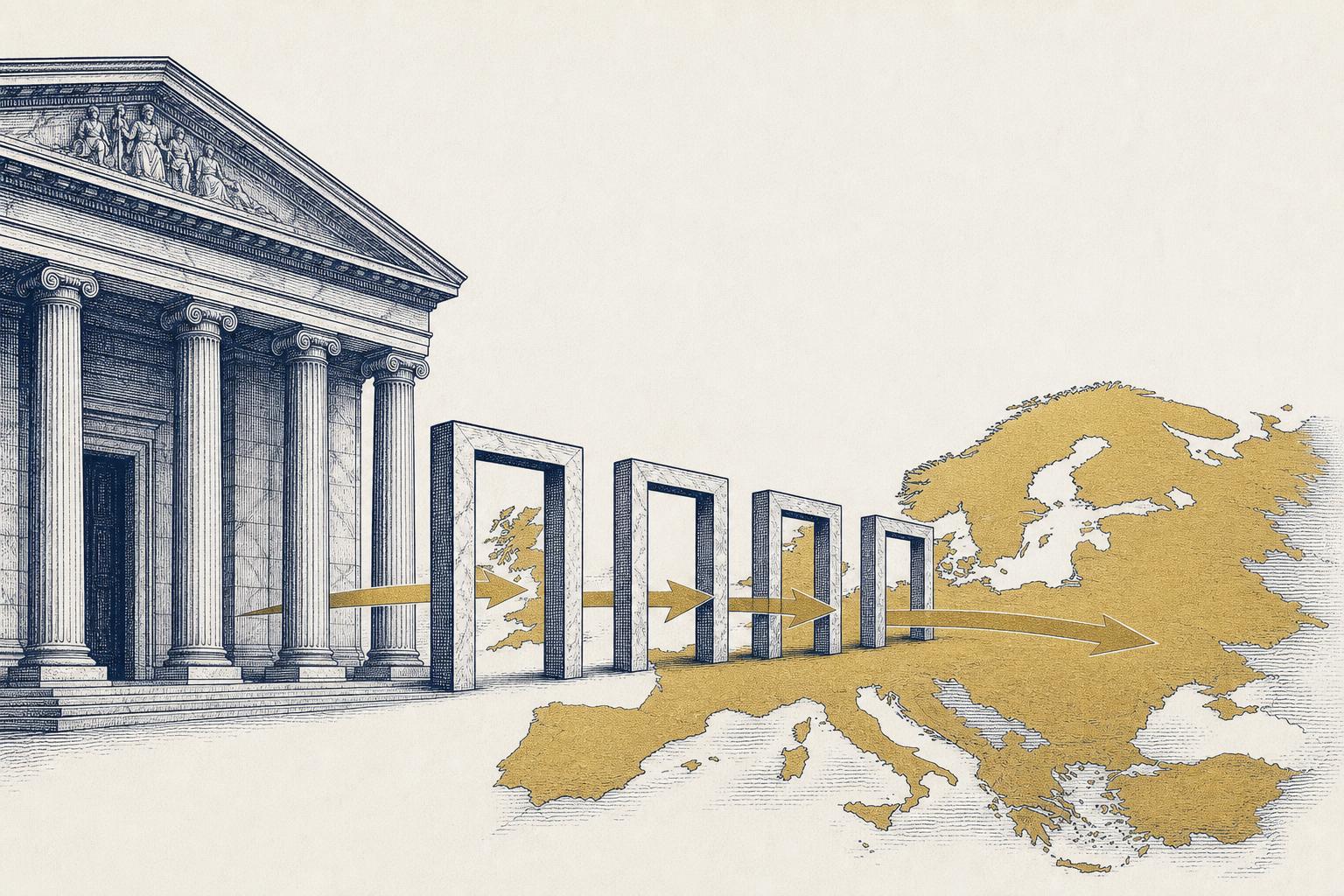
Greece enters the MiCA register with its first four authorized crypto firms
Greece has authorized its first four crypto-asset service providers, whose names now appear on the ESMA MiCA register, the European Union’s central list of firms cleared to offer crypto services. The Greek entrants are BCash, Xenios Blockchain Group, Capital Wallet Greece and Piraeus Bank.
Until this month Greece had no authorized providers at all, placing it among the last EU states to clear domestic firms under the Markets in Crypto-Assets regulation. The same register update added six providers from Germany, France and Slovenia, bringing the total to 359 across the bloc. The Hellenic Capital Market Commission is the competent authority for BCash, Xenios Blockchain Group and Capital Wallet Greece, while the Bank of Greece oversees Piraeus Bank, a reflection of MiCA’s allowance for member states to divide supervision between more than one authority.
The registrations carry practical weight: each of the four firms can now offer crypto services across the entire EU under MiCA’s passporting system, not only in Greece. Greece transposed MiCA into national law through Law 5193/2025, with a licensing process that pairs an initial assessment with a decision window of 40 business days. Piraeus Bank’s place in the first cohort also puts a major Greek lender on the register rather than only specialist crypto firms.
The milestone arrives roughly two months after MiCA’s transitional period expired on July 1, a cutoff after which providers without authorization had to shut EU operations. Greece had trailed Germany, France and the Netherlands, which led earlier licensing.
The timing sits awkwardly beside Binance’s exit. The exchange, the world’s largest by trading volume, applied for a Greek license in January 2026 and withdrew the application on June 24, before the regulator issued a decision. Binance cited a complicated application timeline and said it would pursue authorization in other EU jurisdictions.
That withdrawal became contentious in September, when the Wall Street Journal reported that ECB President Christine Lagarde had intervened against the Greek application after officials indicated the HCMC intended to approve it. The HCMC has denied the story in writing, stating that HCMC categorically rejects the assertions attributed to it
and that no official communicated with any ECB official about the matter. The ECB declined to comment, and Binance has said it would not comment on speculation. The reported intervention therefore remains an allegation, denied on the record by the Greek regulator.